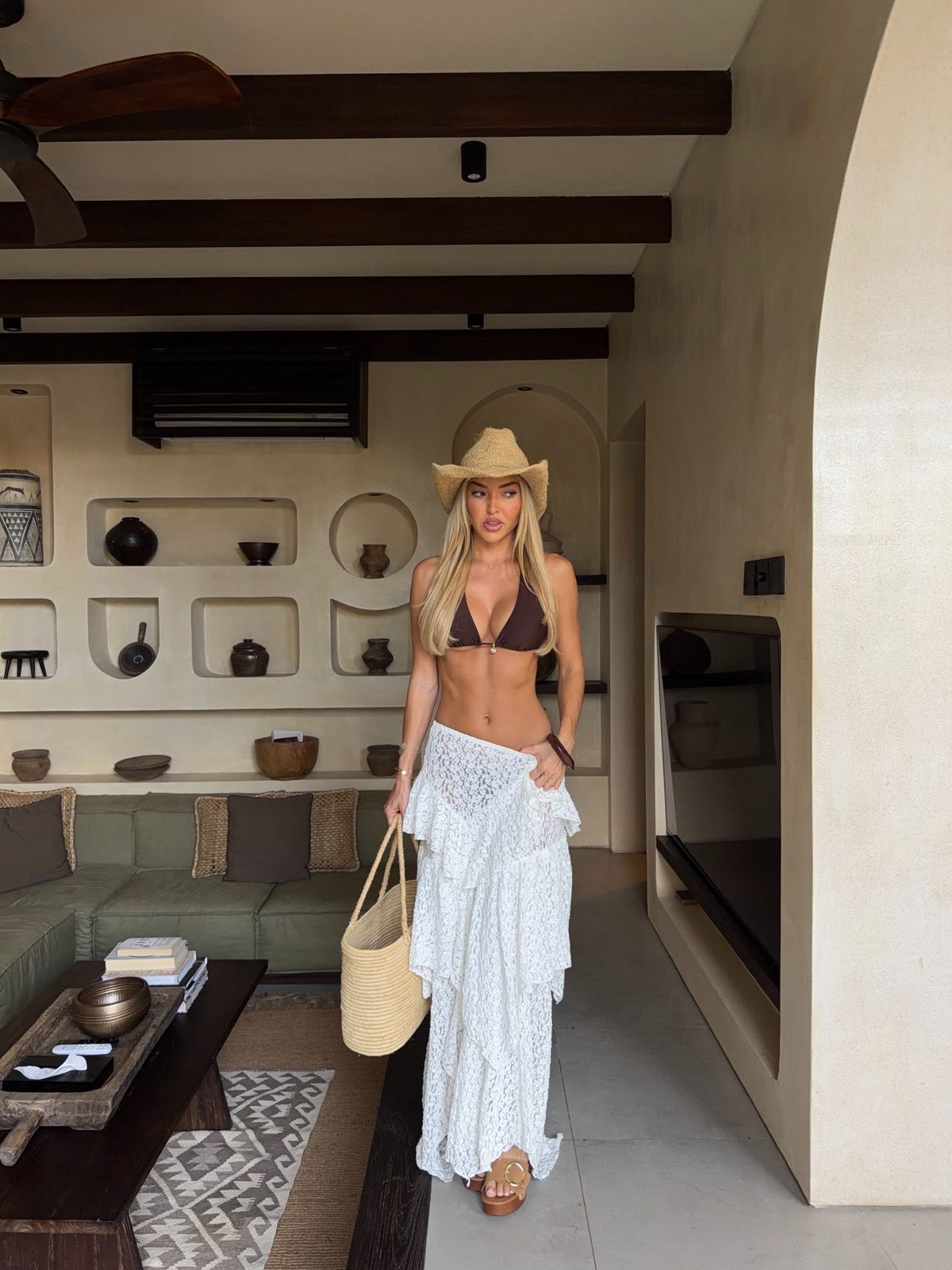
The rhythm of the town
Saint-Tropez doesn't run on a calendar of weeks. It runs on the calendar of one season. From June to September it is the densest resort on the coast: the port packed with yachts three abreast, more than twenty beach clubs working along Pampelonne, a lunch table at Club 55 in August booked weeks out, and the drive from La Foux to the port — seven minutes in winter — stretching to a full hour.
In June and September the tempo is human. Hotels are open, the clubs are running, the sea is warm, but the town still (or already) has room to breathe. A request for tonight usually closes in thirty to sixty minutes, the choice is wide, the agreement unhurried. These are the best weeks for a first trip: everything August has, minus the queues and minus triple rates on a house.
July and August are another matter entirely. Guests arrive with families and friends for two or three weeks, villas are let Saturday to Saturday, yachts sit on the roads and come into port on the harbourmaster's schedule. Demand for companions across those six or seven weeks runs higher than every other month of the year put together. We'll say it plainly: we will take "tonight, 12 August", but the choice will be narrow. Planning two or three weeks ahead changes the picture completely.
Plainly about the off-season
People tend to write about Saint-Tropez as if it were the same town all year round. It isn't, and a client is better off knowing that in advance.
From November to March the place is close to empty. Around four thousand people live here year-round, and part of the hotel stock closes for winter — Cheval Blanc, Byblos and La Réserve Ramatuelle are seasonal and open in spring. Les Caves du Roy is shut. The Pampelonne beach clubs come down in late autumn: under the beach development plan their structures are not permanent and are dismantled for the winter, so instead of twenty-five clubs along four and a half kilometres of sand there is an empty strip and the wind. What stays open: the market on Place des Lices, a few restaurants in the old town, the cafés on the port, the Annonciade museum.
We don't hide this and we don't perform a "year-round presence". Out of season we work by advance request: the model travels in from Nice, Cannes or Marseille, agreement takes a day or two rather than thirty minutes, and the format is almost always a long one — a villa, a weekend, a trip. If what you want is one February evening on the Côte d'Azur, Monaco or Cannes usually makes more sense, and we will tell you so.
April and May are the changeover: hotels reopen one after another around Easter, the Bravade de Saint-Tropez falls in mid-May, and in June the Giraglia race starts from the port. From that point until Les Voiles at the end of September the town runs at full tilt.
Where we work
Vieux Port is the centre of everything. Quai Jean Jaurès, Quai Suffren, môle Jean Réveille where the big boats tie up. The row of terraces along the water — Sénéquier with its red chairs, Le Gorille, Café de Paris — is the main stage of the town: people lunch here, arrange to meet here, look at the yachts and at the people looking at the yachts. Our standard format in the port is dinner at Le Girelier or on one of the terraces, a walk along the quay, an evening programme.
The old town and La Ponche — the quarter behind the port: narrow cobbled lanes, the ochre bell tower of Notre-Dame-de-l'Assomption, the small beach where the Sentier du Littoral coast path begins. This is where the intimate restaurants and the quietest hotels in town are. One practical detail we always go over with the model: the cobbles. Nobody walks the old town in stilettos, and that is physics rather than style.
Place des Lices — plane trees, pétanque, the market on Tuesday and Saturday mornings, boutiques around the square and Hôtel de Paris Saint-Tropez two minutes away. Next to it, the sixteenth-century citadel with its maritime museum and a view over the whole bay: a short daytime scenario, an hour or an hour and a half.
Pampelonne and Ramatuelle — four and a half kilometres of sand in the neighbouring commune, twenty minutes from the port along the Route des Tamaris. The beach clubs are here, this is where most of our clients spend their July and August days, and the hotels La Réserve Ramatuelle and Villa Marie stand on the hills above the beach. Higher up, the villages of Gassin and Ramatuelle look out over the Côtes de Provence vineyards: Château Minuty in Gassin, a rosé tasting with lunch, is a daytime scenario in its own right. La Croix-Valmer, with Gigaro beach and Lily of the Valley, is twenty minutes south.
Trips along the coast — Sainte-Maxime (twenty minutes by water, an hour by road around the bay), Port Grimaud, Cannes (an hour and a half), Nice (an hour and a half to three), Monaco (two to two and a half), Hyères and the islands of Port-Cros and Porquerolles. Agreed in advance, a day's notice minimum. For clients on a yacht we go out with the crew: the coves at Cap Taillat and l'Escalet.
The Pampelonne beach clubs
This is an institution in itself, and it is better understood before you arrive than on the spot.
Club 55 on Boulevard Patch is the oldest and the calmest. Open since the mid-fifties, lunch only, wooden tables under a reed canopy, no DJ. Nobody dances on the tables here — people eat raw vegetables with anchovy paste and look at the sea. Nikki Beach on the Route de l'Épi is the opposite pole: a DJ set, champagne, sunbeds, and by four in the afternoon the club has turned into a daytime disco.
Loulou Ramatuelle is lunch on the sand done the Paris way: restaurant service, a slightly older and calmer crowd. Verde Beach — light cooking and music that climbs towards the evening. Indie Beach is the quietest of the five: loungers under the pines, a kitchen without theatre.
For July and August a table is booked weeks ahead; for June and September three or four days is enough. The booking is made by the client or their concierge service — we coordinate the time and place of the meeting, but we won't get you a table at Club 55 and we won't promise to.
Logistics: how people get here
Nice airport (NCE) is a hundred and ten kilometres and an hour and a half by road: the A8 to the Le Muy exit, then the D25 through Sainte-Maxime, or via Cogolin and Grimaud. In August those same hundred and ten kilometres turn into three hours without much effort. The bottleneck is known to everyone — the La Foux junction at the head of the bay, where the roads from Sainte-Maxime, Cogolin and Gassin all meet.
Helicopter — twenty-five minutes from Nice, landing at the Grimaud helipad or at La Môle — Saint-Tropez airfield fifteen kilometres from town, then ten to twenty minutes by car. The most predictable way in at the height of August. La Môle takes private aviation, but the runway is short and suits aircraft of the corresponding class; larger jets land at Nice or at Toulon-Hyères (TLN, about an hour by road).
The sea is a route of its own. Plenty of people arrive by yacht and never touch the roads at all. A shuttle boat crosses the bay from Sainte-Maxime in fifteen to twenty minutes, and in August that beats any car. A berth in Vieux Port is booked with the harbourmaster well in advance: in July and August the places along môle Jean Réveille are spoken for months out, and everyone else anchors off and comes in by tender.
Inside town a car is more hindrance than help: the car parks under Place des Lices and by the port fill up by midday in summer, and taxis are scarce. The standard answer is a driver with a car for the whole evening. We build this into the planning: "twenty minutes from Ramatuelle to the port" means forty in August, so the model leaves with time in hand.
Etiquette and dress code
The dress code here is resort but expensive — not a contradiction, just an accurate description. A jacket is needed almost nowhere. Trainers and sportswear are needed nowhere either.
Lunch on Pampelonne: a light dress or a tunic over a swimsuit, flat sandals, a hat, minimal jewellery. At Club 55 a demonstrative look is out of place, the room values the opposite; at Nikki Beach you can go brighter. Dinner in the port and in the old town: a summer dress, a stable sole because of the cobbles, and a wrap — after sunset the sea pushes cool air in even in August. La Vague d'Or is the most formal scenario in town: a long or cocktail dress, shirt and trousers for the guest, shorts in the evening are out of place.
Les Caves du Roy is the "dress so they let you in" format: beachwear, shorts and trainers don't get past the door, the face control is real, and the economics of the evening are built around the table rather than the entrance ticket. A model working that scenario knows the rules and needs no reminding.
Hotel reception staff take a guest's visitor calmly and without extra questions — provided the arrival is handled correctly. Correctly means no luggage, a guest agreed in advance, and no conversation at the desk.
Plainly about working in Saint-Tropez
Minimum slot — 2 hours, the same as in every city of the network. In Saint-Tropez it is a rare format: two hours is not enough to have lunch on Pampelonne or to get to Ramatuelle and back. The real format here starts at four hours, and more often it is a whole evening, a night, or a day on the water.
Base pricing: €1,500 for 2 hours, €2,000 for 4 hours. Media segment — from €3,500 for 2 hours and from €5,000 for 4 hours. A night, twenty-four hours, two days and any trip beyond the bay are on request through the manager: too many variables, from route to logistics, to name a figure up front. Currency — euro. We accept cash, bank transfer and, by agreement, cryptocurrency.
For peak dates terms are discussed separately. That means the two weeks around 14 July, the whole of August, and Les Voiles de Saint-Tropez at the end of September: demand on those days runs several times the normal level, models are booked well ahead, and the usual "matched within the hour" does not apply to them. For every other date of the season — the ordinary procedure set out in this document.
Sharing a model's photos with third parties is forbidden. We don't haggle after the meeting. These boundaries are the same across all 58 cities of our network.
The APEX team
Names stay private — this is what our clients value. What we can show is roles, scope and the work each person does in your scenario.
APEX expert for Saint-Tropez
Local specifics · venues · routes
Knows the Saint-Tropez hotel and restaurant scene firsthand: which reception will be discreet, which maître d' to call directly, which dress code holds for which venue. Brief any new model joining the Saint-Tropez pool.
Direction manager
Telegram · WhatsApp · 24/7
On shift in chat. Replies within the first three minutes. Holds the full picture of the day: who is free, who fits the scenario, what is booked at which venue. The first person you talk to.
VIP client curator
Returning clients · long-form scenarios
Works with returning clients on a personal basis. Holds preferences, scenario history, the small details that make the second meeting easier than the first. Manages weekend and travel formats.
Cultural programme coordinator
Theatre · opera · receptions
Holds the box-office contacts for the city, knows the dress codes by venue and by event class. Briefs the model when the scenario includes a premiere or a closed reception.
Travel and event specialist
Out-of-city · weekend · international
Coordinates trips beyond the city: visa timing, transfer logistics, accommodation, on-site fixers when needed. Plans 2-7 day formats and inter-city moves.
Where we are
Building
APEX Liaison — Saint-Tropez
Address
Quai Suffren,
Saint-Tropez,
83990
Hours
24/7 in season (June-September), off season by request
This address houses a coordination point on the Old Port. Meetings with companions take place at hotels in town and in Ramatuelle, on yachts in Vieux Port, at the Pampelonne beach clubs, in restaurants on the quay and at clients' villas — not at this address. Communication runs through the Telegram manager.
Open in Google Maps →